| Chilton
Undergraduate Research Endowment
Dr. William Scott Chilton, Professor of Botany from 1983-2003,
and his wife Dr. Mary Dell Chilton, established the Chilton Undergraduate
Research Endowment upon Dr. Scott Chilton’s retirement from the
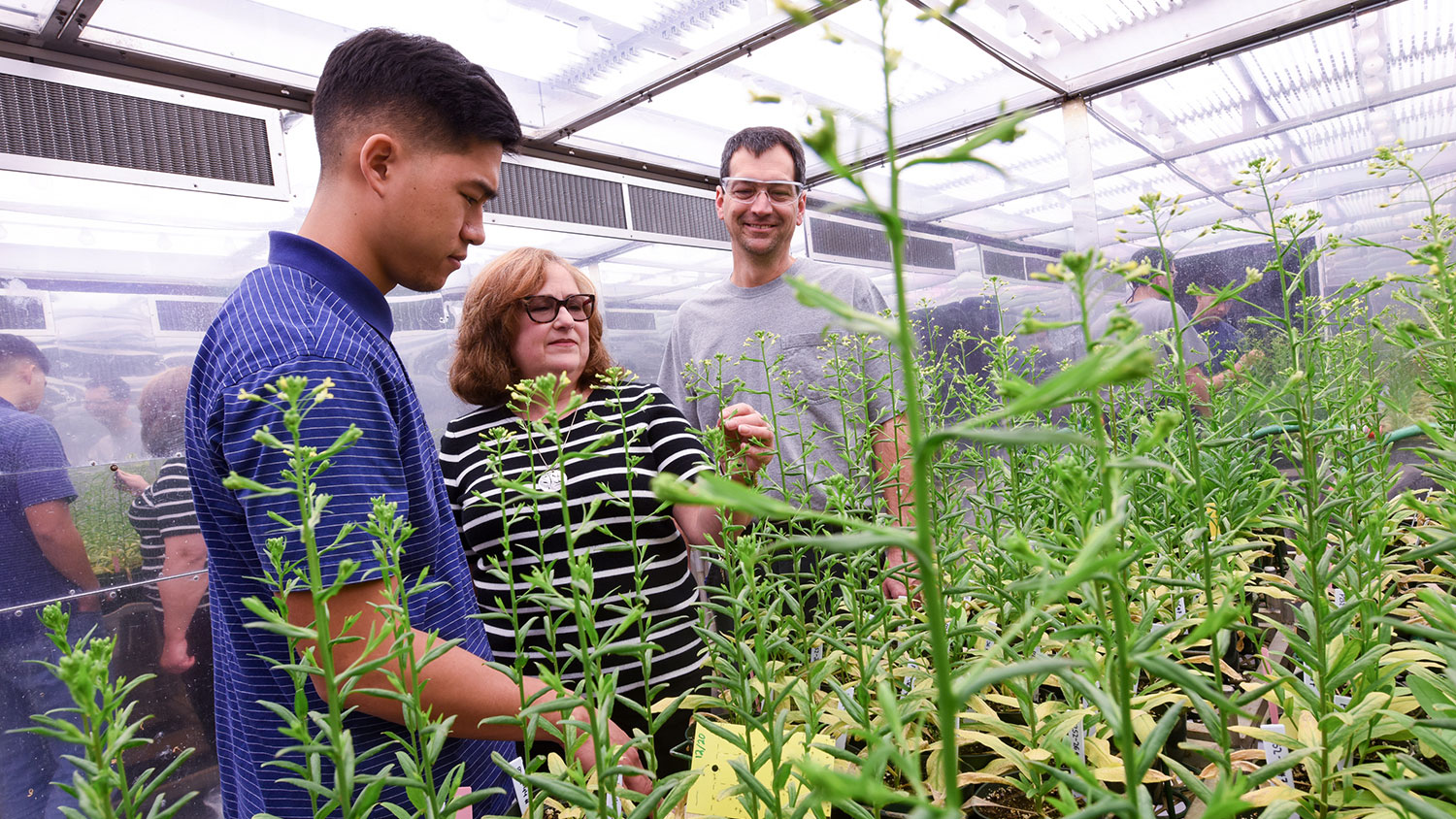
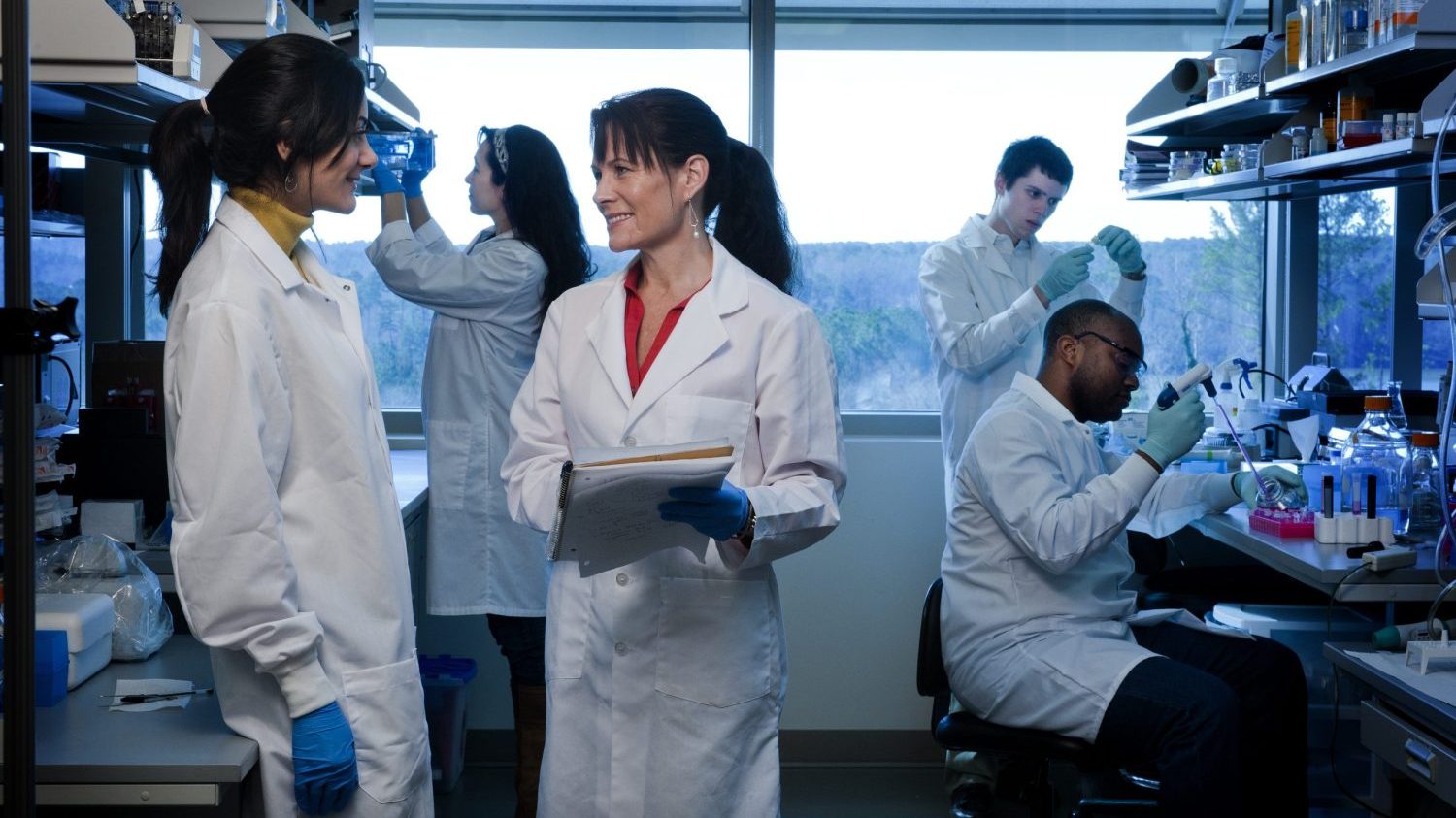
department. This endowment provides support for undergraduates from any
discipline to conduct research in botanical sciences. Dr. Chilton took
pride in mentoring and serving as a role model for a continuous stream
of young scientists-to-be, especially during their initial laboratory
training. According to Dr. Chilton, “I
have seen a number of undergraduates who joined my lab become enthused
about research, publish papers with me, and go on to pursue advanced
degrees. Often, the students performed even better in class work as they
saw the relevance to real science in the laboratory.” Dr. Chilton
found it “personally gratifying to see a number of them go on to
pursue advanced degrees and establish interesting and valuable careers
later in life.” The Chilton Undergraduate Research Endowment fittingly
recognizes Dr. Scott Chilton’s considerable contributions and dedication,
both financially and academically, to providing research opportunities
for students throughout his career. Donations to the endowment can be
made by clicking here: Chilton Undergraduate Endowment.
Dr.
William Scott Chilton passed away on Aug. 5, 2004 while on a hiking
trip on Mount Adams in Washington State. Dr. Chilton had been a member
of the Department of Botany (now Plant Biology) since 1983, where he
taught and conducted research in the fields of phytochemistry, secondary
metabolism, and the chemistry and ethnobotany of medicinal plants.
He taught an immensely popular undergraduate course on medicinal plants,
weaving ethnobotany and chemistry in a class that built a following
among students of diverse majors. He also taught graduate courses in
plant secondary metabolism and phytochemical methods. He served as
advisor to numerous graduate and undergraduate students and postdoctoral
associates, hosted visiting scientists, and was an invaluable colleague
and collaborator for faculty across campus and beyond. His contributions
to his students, colleagues, and his science are irreplaceable. Scott
Chilton was born and raised in Philadelphia, PA, the son of a chemical
engineer and educator. He attended Duke University on a Naval ROTC
scholarship, where he majored in chemistry. He graduated summa cum
laude from Duke in 1955, where he ranked second in his graduating class.
He studied for a year at the University of Tubingen in Germany on a
Fulbright Fellowship, followed by three years as a Naval officer. He
did his graduate work in organic chemistry at the University of Illinois,
conducting research on the structures of neomycin antibiotics, and
received his PhD in 1963. He started his academic career in the Department
of Chemistry at the University of Washington. After 17 successful years
and promotion to the level of Professor, he moved to Washington University
in St. Louis, where he served as visiting professor of biology, before
joining Department of Botany at NC State. During the 41 years of his
professional career, Dr. Chilton taught
a diversity of classes and distinguished himself in research on the natural
products chemistry of plants, fungi, and plant-associated microbes, the
structure of novel amino acids, organic sulfur compounds and other organic
compounds, and the chemistry of medicinal plants and ethnobotany uses
of plants. He was well known for his pioneering work on metabolites produced
by the crown-gall pathogen, Agrobacterium, his studies of mushroom toxins,
efforts to improve pest resistance in corn through characterizing and
manipulating secondary pathways, the discovery and characterization
of novel fungal metabolites and their potential for biocontrol of weeds,
chemistry of fungal perylenequinone toxins, and the identity and characterization
of medicinal plants. In addition to the courses taught at NC State,
he taught courses on organic chemistry, spectroscopy, organic synthesis,
and plant metabolism. He was a member of Phi Beta Kappa, Sigma Xi,
American Society of Plant Biologists, American Society of Pharmacognosy,
American Chemical Society and North American Mycological Society.
|