 |
Marc A. Cubeta
Associate Professor Soil Mycology
Research Description
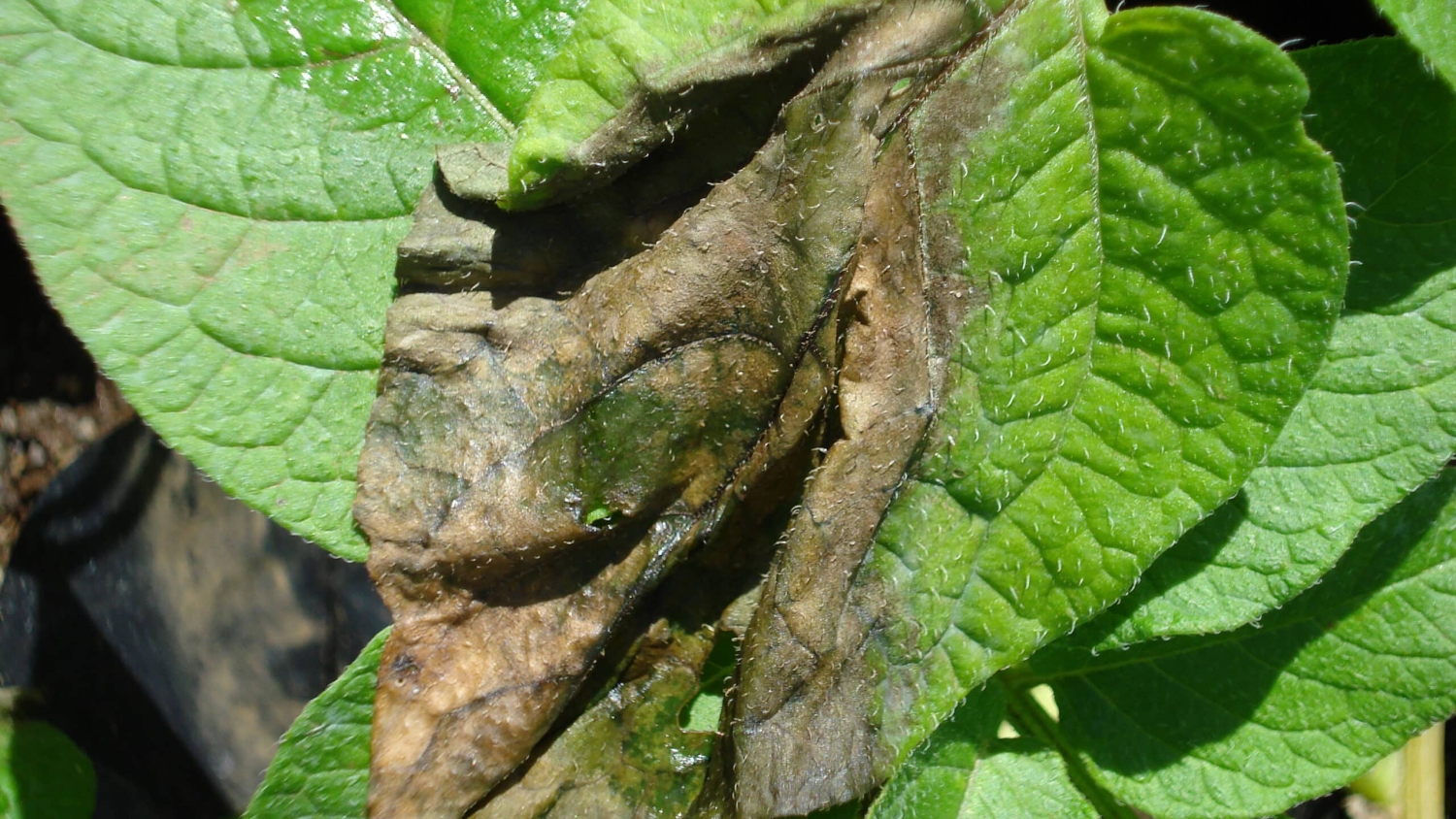
For several years we have been examining the phylogeny and taxonomy of fungi classified as Rhizoctonia based on DNA sequence analysis of β-tubulin and ribosomal RNA genes. Information from these experiments has contributed to our understanding of species concepts in Rhizoctonia and provided a conceptual framework for defining individuals and populations. From a population perspective, I am particularly interested in understanding the 1) relative contribution of asexual and sexual reproduction to the genetic diversity and structure of field populations, 2) genetic relatedness and distribution of fungal individuals in nature, 3) evolutionary processes such as gene flow and recombination that shape populations, and 4) genetic isolation or subdivision (differentiation) of populations associated with geographic location and/or host specialization. I am currently involved in a collaborative project with Stellos Tavantzis (University of Maine) to determine the genetic diversity and occurrence of double strand RNA elements (mycoviruses) in natural populations of Rhizoctonia solani and the role that they play in the parasitic and saprophytic behavior of the fungus. Information generated from population-based experiments will be utilized to develop novel approaches for managing plant diseases caused by R. solani .
Teaching Description
PP501 Biology of Plant Pathogens (fall) - This course is designed as a graduate level introduction to the biology, ecology, genetics, physiology and taxonomy of bacteria, fungi, nematodes and viruses that cause plant disease. It is intended as a first course for graduate students interested in obtaining a major or minor in Plant Pathology as well as for those students that have an interest and research project involving plant pathogens but are not pursuing a degree in Plant Pathology (co-instructors, D. Ritchie, D. Bird and S. Lommel)
PP575 Introduction to Mycology (fall, even years) - This course is a survey of the fungal kingdom in context of phyla and classes. Systematics, ecology, biology and utilization. Illustrative material, cultural techniques in laboratories. Collection and paper required. (co-instructor, Dr. Larry Grand)
PP730 Fungal Genetics and Physiology (fall, odd years) – This course provides an introduction to basic concepts of genetics and physiology of fungi, with emphasis on saprophytic and plant pathogenic filamentous fungi. Current topics on evolution, cell structure, growth and development, gene expression, metabolism, sexual and asexual reproduction and incompatibility systems are discussed. Laboratory exercises are conducted on mutant isolation, sexual and parasexual analysis, genetic transformation, and RFLP and isozyme analysis (co-instructors G. Payne and M.Daub).
Professional Experience
- Present: Associate Professor, Department of Plant Pathology, North Carolina State University, Raleigh, NC.
- July 1994 - June 2000:Assistant Professor, Department of Plant Pathology, North Carolina State University, Raleigh, NC.
- Jan 1992 - June 1994: Post-doctoral Research Associate, Department of Botany, Duke University, Durham, NC.
- June 1991 - Dec. 1991: Plant Pathology Research Intern, ICI Americas, Whitakers, NC.
- July 1987 - May 1991: Graduate Research Assistant, Department of Plant Pathology, North Carolina State University, Raleigh, NC.
- Sept. 1983 - June 1987: Research Plant Pathologist, Asgrow Seed Company, San Juan Bautista, CA.
- June 1981 - Aug. 1983: Graduate Research Assistant, Department of Plant Pathology, University of Illinois, Urbana, IL.
Research Publications
2007
- Rinehart, T., Copes, W., Toda, T. and Cubeta, M.A. 2007. Genetic characterization of binucleate Rhizoctonia species causing web blight on azalea in Mississippi and Alabama. Plant Dis. 91:616-623.
2006
- Gonzalez-Hernandez, D., Vilgalys, R., and Cubeta, M.A. 2006. Phylogenetic utility of indels within sequences of ribosomal and beta-tubulin genes in fungi belonging to the Rhizoctonia species complex. Mol. Phylogen. Evol. 40:459-470.
2005
- Abad, J.A., Moyer, J.W., Kennedy, G.G., Holmes, G.A., and Cubeta, M.A. 2005. An
epidemic of Tomato spotted wilt virus on potato in eastern North Carolina. Amer. J. Potato Res. 82:101-107.
- Payne, G.A. and Cubeta, M.A. 2005. Biology and Detection of Human and Plant Pathogenic Fungi. In Microbial Forensics, pp. 109-130. Eds. R.G. Breeze, B. Budowle and S.E. Schutzer, Elsevier, London, UK. 425 pp.
2003
- Bush, B.J., Carson, M.L., Cubeta, M.A, Hagler, W.M., and Payne, G.A. 2003. Infection and fumonisin production by Fusarium verticillioides in developing maize kernels. Phytopathology 94:88-93.
- Ceresini, P.C., Shew, H.D. Vilgalys, R., U.L. Rosewich-Gale and Cubeta, M.A. 2003. Detecting migration in populations of Rhizoctonia solani AG-3 from potato in North Carolina using multilocus genotype probabilities. Phytopathology 93:610-615.
- Cubeta, M.A., Mozley, S.E., and Porter, D. 2003. Laboratory Exercises with Zoosporic Fungi. CRC Press, eds. Trigiano and Windam, pp. 99-110.
- Hollowell, J.E., Shew, B.B., Wilcut, J.W., and Cubeta, M.A. 2003. Weed species as hosts of Sclerotinia minor in peanut fields. Plant Dis.87:197-199.
- Mozley, S.E., Leander, C.E., Porter, D, and Cubeta, M.A. 2003. Concepts:Zoosporic fungi. CRC Press, eds. Trigiano and Windam, pp. 91-98.
2002
- Ceresini, P.C., Shew, H.D., Rosewich, L., Vilgalys, R. and Cubeta, M.A. 2002. Genetic diversity of Rhizoctonia solani AG-3 on potato and tobacco in North Carolina. Mycology 94:448-460.
- Ceresini, P.C., Shew, H.D., Rosewich, L.,Vilgalys, R. and Cubeta, M.A. 2002. Genetic structure of populations of Rhizoctonia solani AG-3 on potato in eastern North Carolina. Mycology 94:437-447.
- Wangsomboondee,T., Groves, C.T., Shoemaker, P.B., Cubeta, M.A. and Ristaino, J.B. 2002. Phytophthora infestans populations from tomato and potato in North Carolina differ in genetic diversity and structure. Phytopathology 92:1189-1195.
2001
- Gonzalez, D., Carling, D.E., Kuninaga, S., Vilgalys, R. and Cubeta, M.A. 2001. Ribosomal DNA systematics of Ceratobasidium and Thanatephorus with Rhizoctonia anamorphs. Mycologia 93:1138-1150.
additional publications
Education
Professional Associations and Honor Societies
- Alpha Zeta
- American Association for the Advancement of Science
- American Phytopathological Society
- American Society for Microbiology
- Gamma Sigma Delta
- International Rhizoctonia Committee
- Mycological Society of America
- Omicron Delta Kappa
- Potato Association of America
- Sigma Xi
Contact Information
Dr. Marc A. Cubeta
North Carolina State University
Department of Plant Pathology
Box 7616
Raleigh, NC 27695-7616
Tel: (919) 513-1227 (Office)
Tel: (919) 513-4840 (Lab)
Fax: (919) 513-0024
E-mail: marc_cubeta@ncsu.edu
Physical Address
Marc A. Cubeta
North Carolina State University
225 Partners Building III
851 Main Campus Drive
Raleigh, NC 27606
|