NC STATE UNIVERSITY
College of Agriculture and Life Sciences
Department of Plant Pathology
People

Eric L. Davis

Eric L. Davis

Williams Neals Reynolds Distinguished Professor

Campus Box 7903
840 Method Road, Unit 4 Building, Room 213
Raleigh, NC 27607

Office: (919) 515-6692
Lab: (919) 515-6693
FAX: (919) 513-1279
email: eric_davis@ncsu.edu

NCSU Biotechnology Faculty Member

NCSU Research and Professional Ethics Program Fellow


Teaching Activities

PP790C-Phytonematology (formerly PP504)

Pre: PP 315 or Consent of Instructor . I am the instructor for this introductory course in nematology. Nematodes are microscopic worms (often less than 1mm long) that are soil-dwelling, and they mainly attack plant roots. PP 504 is a 3-credit, graduate-level class with lab held in the Spring semester of odd numbered years. The course is designed for students with a background in plant pathology, biology, or agricultural sciences, and no prior experience in plant pathology or nematology is required (PP 315 is preferred). Graduate students in majors related to plant pathology are welcome, and PP 504 is open to upper-level undergraduate students with consent of the instructor. Strong emphasis is placed on the integration of classical nematology with modern approaches, and the laboratory portion of PP504 contains lessons from nematode identification to molecular biology.

Research Interests

Our lab's primary interest is with plant-parasitic nematodes, but we are also interested in all aspects of host-parasite interactions. The main objective of our research is to combine information that we generate in both basic and applied investigations towards the goal of improving the control of plant-parasitic nematodes in agriculture. Our present research projects involve:

  1. The isolation and function of nematode parasitism genes and secretory molecules
  2. Nematode genomics, including expressed sequence tags (ESTs) and gene organization
  3. Plant host cellular and molecular response to nematode parasitism
  4. Plant resistance to nematodes, both conventional and bioengineered

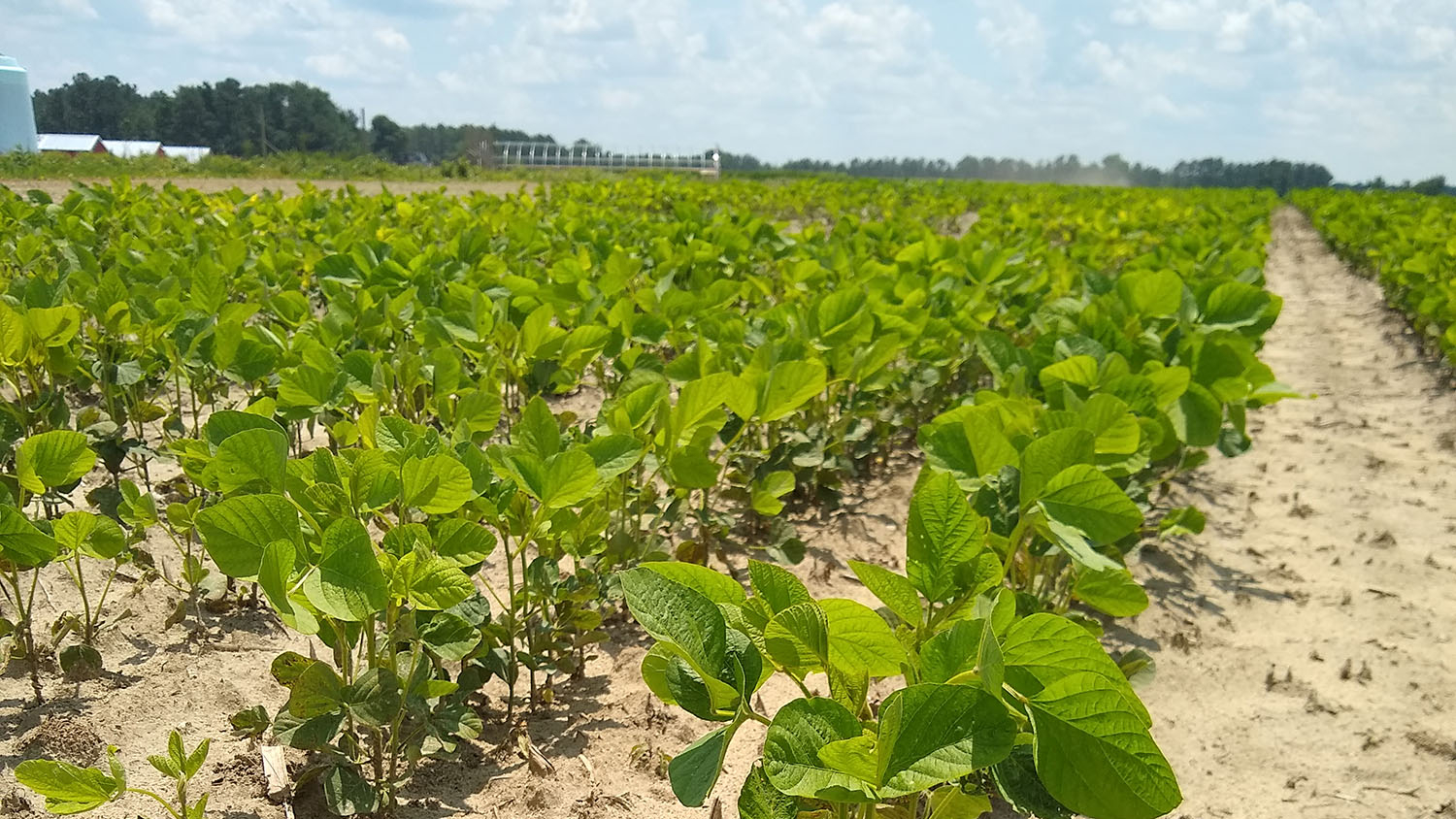
The majority of our research centers around the soybean cyst nematode (SCN), Heterodera glycines, the tobacco cyst nematode (TCN), Globodera tabacum, and the root-knot nematodes, Meloidogyne spp. Cyst nematodes have a very narrow plant host range, while root-knot nematodes have a very wide plant host range. Both types of nematodes enter plant roots completely and transform selected plant cells into elaborate feeding sites that act as permanent nutrient sinks for the rest of the nematode’s sedentary life cycle. Cyst and root-knot nematodes cause billions of dollars in damage each year to many different crops world-wide, and environmentally-safe means of their control are in great demand.

We study the parasitism proteins (secretions) from cyst nematodes and root-knot nematodes that are critical in the plant infection process, and we employ protein and genomics-based approaches to isolate the "parasitism genes" (Davis et al. 2000) encoding these molecular signals. We are conducting experiments using immunocytochemistry and advanced microscopy to monitor nematode secretions and cellular changes within plant roots infected by nematodes. The ultimate objective of this research is to bioengineer plants to disrupt the infection process and make the plants resistant to nematodes.

We collaborate closely on many projects with selected U.S and international scientists to form an International Molecular Plant-Nematode Interactions Group including T.J. Baum of Iowa State University, R.S. Hussey of the University of Georgia, Melissa G. Mitchum of the University of Missouri, Xiaohong Wang of Cornell University, Marie Noelle Rosso of INRA, France, and Geert Smant of Wageningen University, The Netherlands.


Secretions Encoded by Phytonematode Parasitism Genes

Protein Approach

A primary objective of our research is to identify the components and functions of plant-parasitic nematode secretions, with an ultimate goal of targeted disruption of the parasitic process. Parasitism proteins secreted from the nematode stylet (Davis et al., 2004]) play pivotal roles in the infection process. The stylet secretions are produced within the two subventral (SvG) and single dorsal (DG) esophageal gland cells of the nematode, and the activity and contents of these gland cells are dynamic throughout the parasitic cycle. Our initial approach was at the protein level using antibodies that we developed to isolate secretory proteins. Most notable was the isolation of a subventral gland antigen whose amino acid sequence was used to clone the first cellulase (beta-1,4 endoglucanase) genes (Smant et al., 1998) from an animal (cyst nematode). Secretion of the cellulases during nematode migration through root tissues was confirmed (Wang et al. 1999), and analyses of the cellulase genes provided the first reports of potential horizontal gene transfer from bacteria to nematodes (Yan et al., 1998).

Genomics Approach

cDNA libraries generated by RT-PCR from mRNA in the microaspirated contents of soybean cyst and root-knot nematode esophageal gland cells at various parasitic stages were either subjected to selection strategies or chosen for direct expressed sequence tag (EST) analyses (Gao et al., 2003; Huang et al., 2003; Wang et al., 2001). For soybean cyst and root-knot nematodes, respectively, greater than fifty and thirty unique "parasitism gene" clones demonstrating a predicted N-terminal signal peptide for secretion and expression exclusively in the esophageal gland cells (SvG and/or DG) by mRNA in situ hybridization have been generated and prioritized. Microarrays spotted with cDNA of the parasitism genes isolated from soybean cyst nematode indicated differential expression of these genes in early and late nematode parasitic stages (DeBoer et al., 2002).

Parasitism Gene Function

Polyclonal antibodies generated to synthetic peptides derived from sequence of prioritized parasitism genes are being evaluated by Research Associate Dr. Hanane Diab Hanane Diab and Lab Research Specialist Chunying LiChunying Li in our lab. The antisera will be used to detect where and when individual parasitism gene products are secreted in planta.

The C-terminal domain of the H. glycines parasitism gene SYV46 (Wang et al., 2001) has similarity to CLAVATA3, an endogenous plant peptide locally secreted by specific meristem cells to control plant stem cell differentiation and negatively regulate the plant WUSCHEL gene. Former Research Associate Dr. Xiaohong Wang Xiaohong Wang has demonstrated that HG-SYV46 can complement a clv3 mutant of Arabidopsis and regulate WUSCHEL expression (Wang et al., 2005). This suggests that SYV46 secreted by H. glycines may regulate feeding cell differentiation by mimicking plant CLV3.

To test the potential binding of SYV46 to a CLV1 receptor, and to exploit the available Arabidopsis genetic resources to assay the function of other nematode parasitism genes, homologs of the H. glycines parasitism genes are being investigated by current PhD student Nrupali Patel Nrupali Patelin the related beet cyst nematode (BCN), Heterodera schachtii.

A number of the secreted SCN parasitism gene products have a predicted nuclear localization signal (NLS). Expression of the NLS of some SCN parasitism genes fused to GUS & GFP localizes to the nucleus of plant cells (below) in transient expression assays by collaborators at Iowa State University (Axel Elling & Thomas Baum).

We are also investigating gene knockout via RNA interference (RNAi) as an alternative functional analysis of nematode parasitism genes. Former Research Associate Dr. Serenella SuknoSerenella Sukno and current MS student Jamie McCuiston Jamie McCuiston have demonstrated RNAi of a pectate lyase gene expressed exclusively in the SvG of SCN via ingestion of double-stranded RNA (dsRNA) from a soaking medium. Efforts are now underway to express dsRNA to SCN parasitism genes in planta for ingestion and potential RNAi effects on parasitism.

Plant Response to Nematode Parasitism

We have been active in identifying and monitoring the activity of plant cell wall-modifying enzymes in nematode feeding cells. Former PhD student Melissa Goellner Mitchum Melissa Goellner Mitchum has identified several beta-1,4 endoglucanase (cellulase) genes upregulated in giant-cells and syncytia (Goellner et al., 2001).

As plant cellulases remodel feeding cell walls, extensive deposition of cell wall material results in thickened walls and numerous wall ingrowths. Current PhD student Laura Hudson Laura Hudson is now investigating the potential activity of plant cellulose synthase (CesA) in nematode feeding cells. In initial tests, Arabidopsis plants with mutations in specific CesA genes appear to inhibit root-knot infection.

Select Program Publications (Cited):

  • Davis, E.L., R.S. Hussey, M.G. Mitchum, and Baum, T.J.  2008. Parasitism proteins in nematode-plant interactions. Current Opinion in Plant Biology 11:360-366.
  • Mitchum, M.G., X. Wang, and E.L. Davis.  2008.  Diverse and conserved roles of CLE peptides. Current Opinion in Plant Biology 11(1):75-81.
  • Wang, X., Replogle, A., Davis, E.L., Mitchum, M.G. 2007. The tobacco NtCel7 gene promoter is auxin-responsive and locally induced in nematode feeding sites of heterologous plants. Molecular Plant Pathology 8:423-436.
  • Elling, A.A., M. Mitreva, J. Recknor, X. Gai, J. Martin, T.R. Maier, J.P. McDermott, T. Hewezi, D. M.    Bird, E.L. Davis, R.S. Hussey, D. Nettleton, J.P. McCarter, and T.J. Baum. 2007. Divergent evolution of arrested development in the dauer stage of Caenorhabditis elegans and the infective stage of Heterodera glycines. Genome Biology 8:R211.
  • Elling, A.A., Davis, E.L., Hussey, R.S., Baum T.J.  2007. Active uptake of cyst nematode parasitism proteins into the plant cell nucleus.  International Journal for Parasitology 37:1269-1279.
  • Sukno, S.A., McCuiston, J., Wong, M.Y., Wang,  X., Thon,  M.R., Hussey,  R.S., Baum, T.J., and Davis,  E.L. 2007. Quantitative detection of double-stranded RNA-mediated gene silencing of parasitism genes in Heterodera glycines. Journal of Nematology 39:145-152.
  • McCuiston, J.L., L.C. Hudson, S.A. Subbotin, E.L. Davis, and C.Y. Warfield. 2007. Conventional and PCR detection of Aphelenchoides fragariae in diverse ornamental host plant species. Journal of Nematology 39:343-355.
  • Sukno S., Shimerling O., McCuiston J., Tsabary G., Shani Z., Shoseyov O., Davis E.L. 2006. Expression and regulation of the Arabidopsis thaliana Cel1 endo 1,4b glucanase gene during compatible plant-nematode interactions. Journal of Nematology 38:354-361.
  • Huang, G., R. Allen, E.L. Davis, T.J. Baum, and R.S. Hussey. 2006. Engineering broad root-knot resistance in transgenic plants by RNAi silencing of a conserved and essential root-knot nematode parasitism gene. Proceedings of the National Academy of Sciences 103:14302-14306.
  • Huang, G., R. Dong, R. Allen, E.L. Davis, T.J. Baum, and R.S. Hussey. 2006. A root-knot nematode secretory peptide functions as a ligand for a plant transcription factor.  Molecular Plant Microbe Interactions 19:463-470.
  • Wang X., Mitchum M.G., Gao B., Li C., Diab H., Baum T.J., Hussey R.S., Davis E.L. 2005. Aparasitism gene from a plant-parasitic nematode with function similar to CLAVATA3/ESR (CLE) of Arabidopsis thaliana. Molecular Plant Pathology 6:187-191.
  • Davis, E. L., R. S. Hussey, T. J. Baum, J. Bakker, A. Schots, M. N. Rosso, and P. Abad. 2000. Nematode parasitism genes. Annual Review of Phytopathology 38: 341-372.
  • Davis, E.L., R.S. Hussey, and T.J. Baum. 2004. Getting to the roots of parasitism by nematodes. Trends in Parasitology 20 (3):134-141.
  • DeBoer, J.M., J.P. McDermott, X. Wang, T. Maier, F. Qui, R.S. Hussey, E.L. Davis, and T.J Baum. 2002. The use of DNA microarrays for the developmental expression analysis of cDNAs cloned from esophageal gland cell of Heterodera glycines. Molecular Plant Pathology 3(4):261-270.
  • Gao, B., R. Allen, T. Maier, E. L. Davis, T. J. Baum, and R. S. Hussey. 2003. The parasitome of the phytonematode Heterodera glycines. Molecular Plant-Microbe Interactions 16:270-276.
  • Goellner, M., X. Wang, and Davis, E. L. 2001. Endo-beta-1,4-glucanase expression in compatible plant-nematode interactions. Plant Cell 13: 2241-2255.
  • Huang, G., B. Gao, T. Maier, R. Allen, E.L. Davis, T.J. Baum, and R.S. Hussey. 2003. A profile of putative parasitism genes expressed in the esophageal gland cells of the root-knot nematode, Meloidogyne incognita. Molecular Plant-Microbe Interactions 16: 376-381.
  • Smant, G., J. Stokkermans, Y. Yan, J.M. de Boer, T. Baum, X. Wang, R. S. Hussey, E.L. Davis, F. J. Gommers, B. Henrissat, J. Helder, A. Schots, and J. Bakker. 1998. Endogenous cellulases in animals: cloning of expressed ß-1,4-endoglucanase genes from two species of plant-parasitic cyst nematodes. Proceedings of the National Academy of Sciences 95: 4906-4911.
  • Wang, X., D.M. Meyers, T. J. Baum, G., Smant, R. S. Hussey, and E. L. Davis. 1999. In planta localization of a ß-1,4-endoglucanse secreted by Heterodera glycines. Molecular Plant-Microbe Interactions 12:64-67
  • Wang, X., R. Allen, X. Ding, M. Goellner, T. Maier, J. M. de Boer, T. J. Baum, R. S. Hussey, and E. L. Davis. 2001. Signal peptide-selection of cDNA cloned directly from the esophageal gland cells of the soybean cyst nematode, Heterodera glycines. Molecular Plant-Microbe Interactions14: 536-544.
  • Wang X., Mitchum M.G., Gao B., Li C., Diab H., Baum T.J., Hussey R.S., Davis E.L. 2005. A parasitism gene from a plant-parasitic nematode with function similar to CLAVATA3/ESR (CLE) of Arabidopsis thaliana. Molecular Plant Pathology 6:187-191.
  • Yan, Y., G. Smant, J. Stokkermans, L. Qin, J. Helder, T. Baum, A. Schots, and E. Davis. 1998. Genominc organization of four ß-1,4-endoglucanase genes in plant-parasitic cyst nematodes and its evolutionary implications. Gene 220: 61-70.

Program Funding

  • USDA National Research Initiative Competitive Grants Program
  • United Soybean Board National Grower Checkoff Program
  • North Carolina Soybean Producers' Association
  • North Carolina Tobacco Research Commission
  • Athenix, BASF Plant Science, Divergence, and Mycogen Corporations
  • North Carolina-Israel Partnership/Binational Science Foundation
  • USDA/FAS/ICD/RSED Scientific Cooperation Program
  • USDA-IFAFS Program
  • North Carolina Biotechnology Center