NC STATE UNIVERSITY
College of Agriculture and Life Sciences
Department of Plant Pathology
People

Paola Veronese

Dr. Paola Veronese

Assistant Professor

  • B.S. - Biological Sciences, La Sapienza University of Rome, Italy
  • Ph.D. - Horticulture, La Tuscia University of Viterbo, Italy

Research Interests:

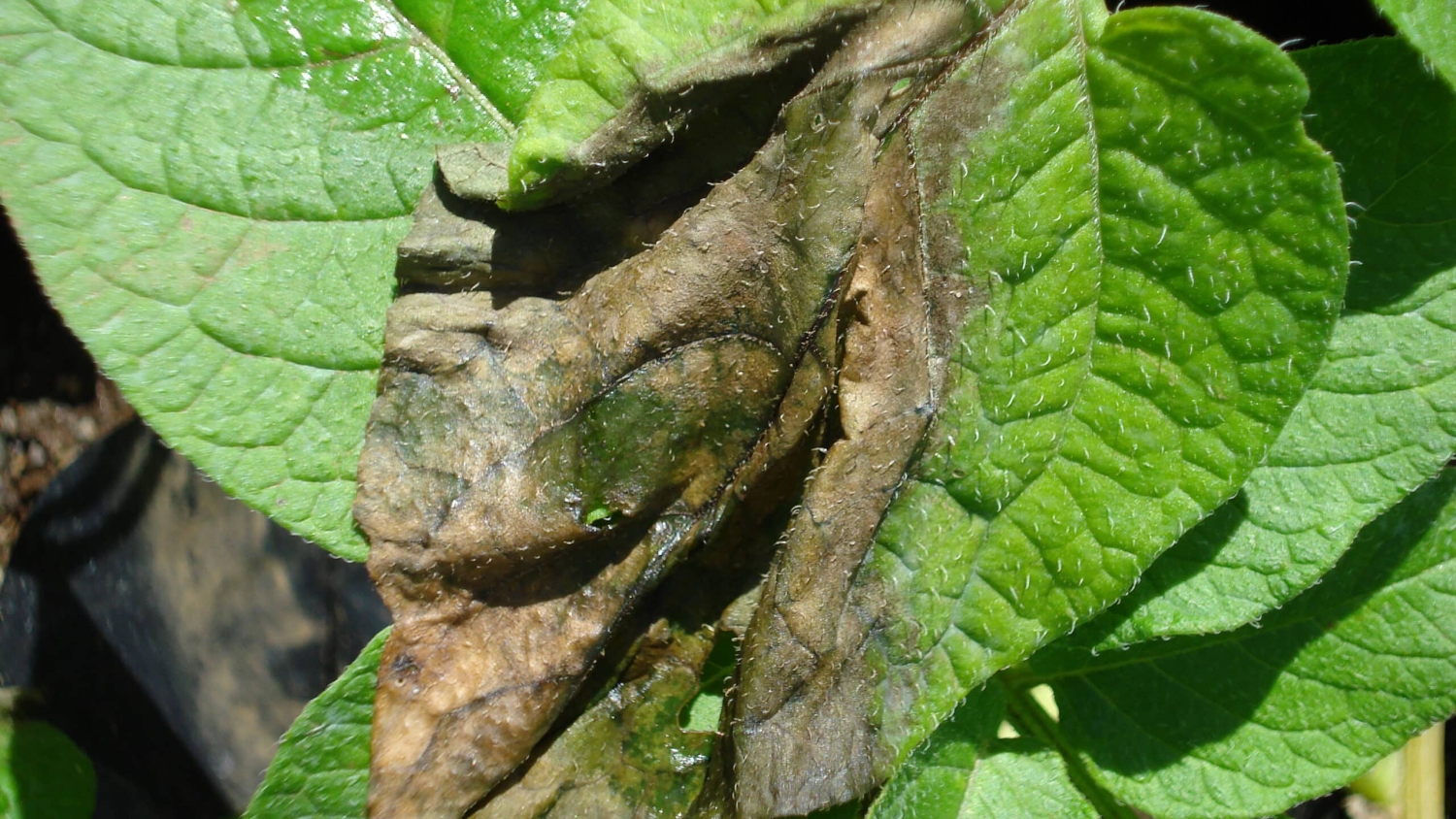
My research interests are directed towards gaining further insights into cellular processes active in defending plants from microbial attacks by applying genetic, molecular and biochemical approaches to model plants with long-term goal of transferring their knowledge to agriculturally important systems. The focus of my recent and current work has been on the molecular genetics of interactions involving the model plant Arabidopsis thaliana and different phytopathogenic fungi. Plants activate diverse defense response mechanisms depending on the nature of the pathogen (Veronese et al., 2003 a). Biotrophic pathogens require living host cells to complete their life cycle. To limit their proliferation, plants evolved ‘gene-for-gene’-based immunity consisting of a rapid elicitation of host localized programmed cell death (PCD) after the recognition of pathogen avirulence (Avr) proteins by host resistance (R ) proteins. Necrotrophic pathogens derive nutrients from dead host cells and kill host tissues by secretion of toxins or activation host PCD. Through a functional genomic approach, I have contributed to deciphering the regulatory network of host defense responses to the necrotrophic Botrytis cinerea against which no single-gene-resistance has been identified in any plant species (Veronese et al., 2004, 2005). Verticillium dahliae Kleb. is a soil-borne fungus which causes vascular diseases in many important crop plants lacking a high degree of host specificity. I have developed and characterized the Arabidopsis-V. dahliae pathosystem showing how the pathogen, causing early flowering and a senescence-like syndrome, is able to induce disease by interfering with the host developmental program (Veronese et al., 2003 b). Via forward genetics, I have isolated T-DNA tagged mutants of Arabidopsis with altered Verticillium disease symptom development named Verticillium hyper- susceptible (vhs) which are currently studied in the lab in order to understand how plants recognize and respond to the colonization by pathogens causing vascular diseases. Further research goal is the identification of molecular and genetic bases of V. dahliae pathogenicity/virulence.

Selected Publications:

P. Veronese, H. Nakagami, B. Bluhm, S. AbuQamar, X. Chen, J. Salmeron, R. A. Dietrich, H. Hirt,T. Mengiste (2006). The Membrane-Anchored BOTRYTIS-INDUCED KINASE1 Plays Distinct Roles in Arabidopsis Resistance to Necrotrophic and Biotrophic Pathogens. Plant Cell 18: 257-273.

P. Veronese, C. Xi, B. Bluhm, J. Salmeron, R. Dietrich, T. Mengiste (2004). The BOS loci of Arabidopsis are required for resistance to Botrytis cinerea infection. Plant Journal 40: 558-574.

P. Veronese, M. L. Narasimhan, R. A. Stevenson, J. -K. Zhu, S.C. Weller, R.A. Bressan (2003). Identification of a locus controlling severity of Verticillium disease in Arabidopsis thaliana. Plant Journal 35: 574-587. (Featured in the cover page of the issue 5) (b)

P. Veronese, M. T. Ruiz, M. A. Coca, H. Lee, J. I. Ibeas, B. Damz, J. M. Pardo, P. M. Hasegawa, R.A. Bressan, M. L. Narasimhan (2003). In defense against pathogen: both plant sentinels and foot soldiers need to know the enemy. Plant Physiology 131: 1580-1590. (Update on Plant Defense) (a)

Maggio, S. Miyazaki, P. Veronese, T. Fujita, J. I. Ibeas, B. Damz, M. Narasimhan, P. M. Hasegawa, R. J. Joly, R. A. Bressan (2002). Does proline accumulation play an active role in stress-induced growth reduction? Plant Journal 31: 687-698.

P. Veronese, X. Li, R.A. Bressan, S.C. Weller, P.M. Hasegawa (2001). Bioengineering mint crop improvement. Plant, Cell Tissue & Organ Culture 64: 133-144 (Special issue: Reviews of Plant Biotechnology and Applied Genetics).

P. Veronese, P. Crino’, M. Tucci, F. Colucci, D.J. Yun, M. P. Hasegawa, R.A. Bressan, F. Saccardo (1998). Pathogenesis-related proteins for control of fungal diseases of tomato. In: Genetics and breeding for crop quality and resistance. G. T. Scarascia Mugnozza, E. Porceddu & M. A. Pagnotta (Eds.). Kluwer Academic Publisher, p. 15-24.

Contact Information:

Center for Integrated Fungal Research
Campus Box 7251
851 Main Campus Drive, Suite 231
Partners III Building - NC State University
Raleigh, NC 27606
Tel: (919)513-8219
Fax: (919)513-0024
Email: paola_veronese@ncsu.edu